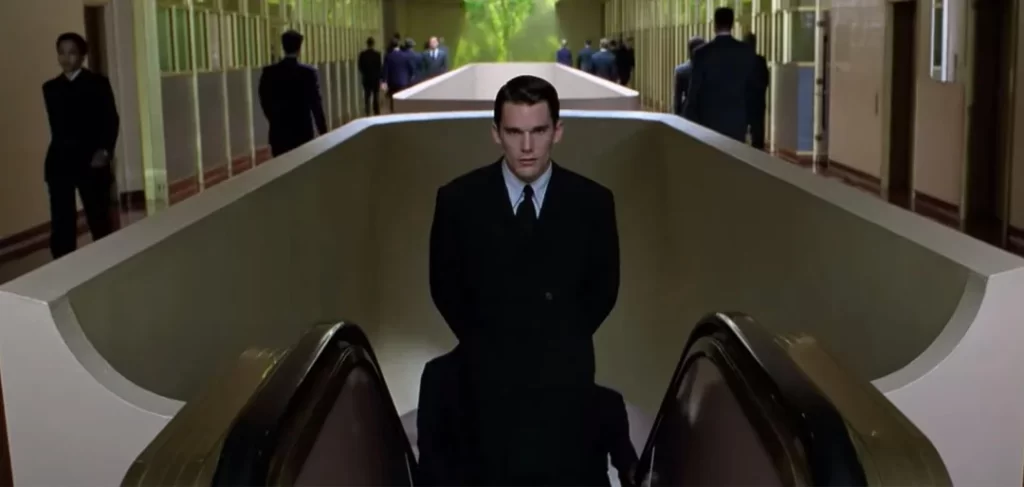
Gattaca (1997)
I loved the aesthetics and art in this, a dystopia where the EPSON/50’s look pervades all tech (including the crazy faxing noises that the cars make) – a surprisingly effective, realistic, tasteful way to center the issues and characters (although much of the motivation was to evoke a noir look). I appreciated the originality of the premise – a gem, not based on a novel but written by the director. The opening credits were exceptional, symbolic, beautiful. Gattaca feels quite a bit naïve about the central issues of privilege and genetics/eugenics.
The larger issues of systemic racism, ableism and sexism are all but ignored (the implications of racism in trait selection are given a single nod during a flashback scene, and by a token person of color, nonetheless). Privileged and melodramatic, kind of like a view through binoculars, the motivations of the main character are not universal by any means, yet they are implicitly treated as such. This was made for ambitious, young, privileged men who dream for… more land to colonize? An escape from Earth?
Gattaca goofily emphasizes the importance of genetics over training/education. There are just so few jobs/tasks that require a completely clean bill of health or perfect physique (and even fewer as tech progresses). The notion that these trainees will be performing ballistic course calculations in the future is positively ridiculous, and it’s unclear if the filmmaker even envisioned the Titan-side day-to-day lives of these creme Accountant-Astronaut-Toblerones with Perfect Hearts…. unless this is a breeding/colonization program.
Uma Thurman’s character was barely needed, but the shot of the main characters embracing while on the Lam from security, behind a dumpster in shafts of light, was worth that entire character. The older brother subplot seemed shoehorned and coincidental when it resurfaced at the end. This felt like the filmmaker trying to fit too much meaning into a normal runtime. I didn’t like how all non-Ethan Hawke characters were essentially siloed off from each other: Uma didn’t(?) interact with Jude Law, etc. Some of the background world-level details don’t really add up, but they were left well enough obscured to be easily forgiven.
The originality, the art direction, the compelling performances, crisp cinematography, and the emerging issues that this raised (for the first time in pop consciousness) make this a solid entry into the sci-fi canon.